Customized meeting rooms for institutions and companies
Designing an institutional meeting room means finding a precise balance between representation, functionality and durability. It is not just a matter of furnishing a space, but of translating the identity of an entity or company into an environment capable of accommodating decision-making, discussion and future vision.
For Saglietti Group, which specializes in the design and creation of custom-made
furniture for offices, executive spaces and institutional environments, each project is born from careful listening to needs and developed through an integrated process that combines design, engineering and production.
ACA Alba: identity, territory and representation
The design of the new meeting rooms of the
Alba Merchants Association (ACA) fits into the institutional heart of the city of Alba. Founded in 1945, ACA today represents more than 2,700 businesses in commerce, tourism and services and is a point of reference for the economic and social development of Alba, Langhe and Roero.
After the restyling of the
Alba Tourist Office, this new assignment represented another step in an ongoing dialogue with the territory: the request was clear from the beginning, to
create two representative meeting rooms, elegant but measured, authoritative but never ostentatious, capable of lasting in both aesthetic and technological terms.
An integrated institutional interior design project
The rooms on the completely new fifth floor were conceived as executive spaces with high functional content. The project required an integrated approach: custom-made furniture, technological systems, materials and finishes had to dialogue seamlessly. The design followed a precise logic:
make the value visible, the technology invisible. Everything needed to be there, but without ever disturbing the formal cleanliness of the spaces.
The meeting table as the technological heart of the space
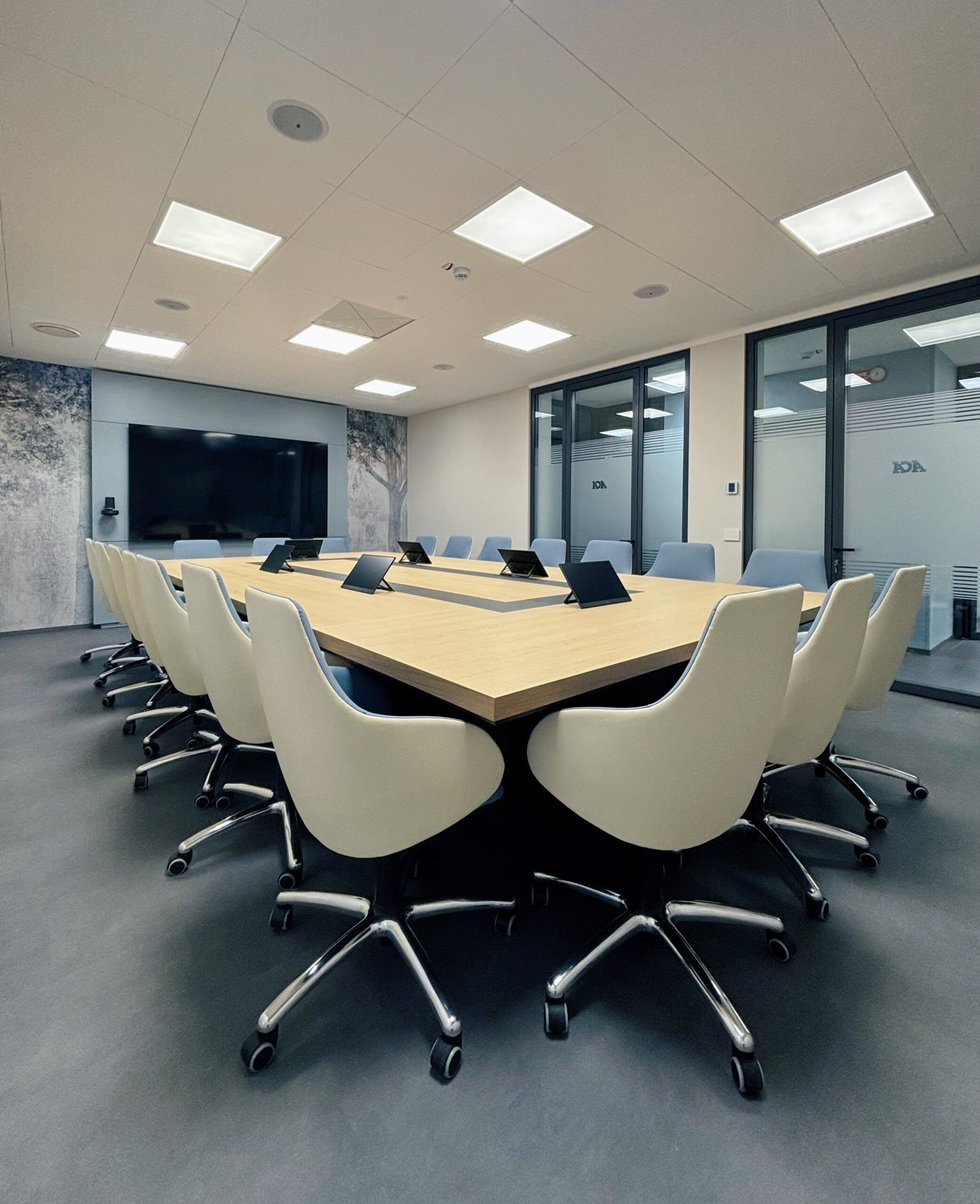
In the main hall, the centerpiece is a large
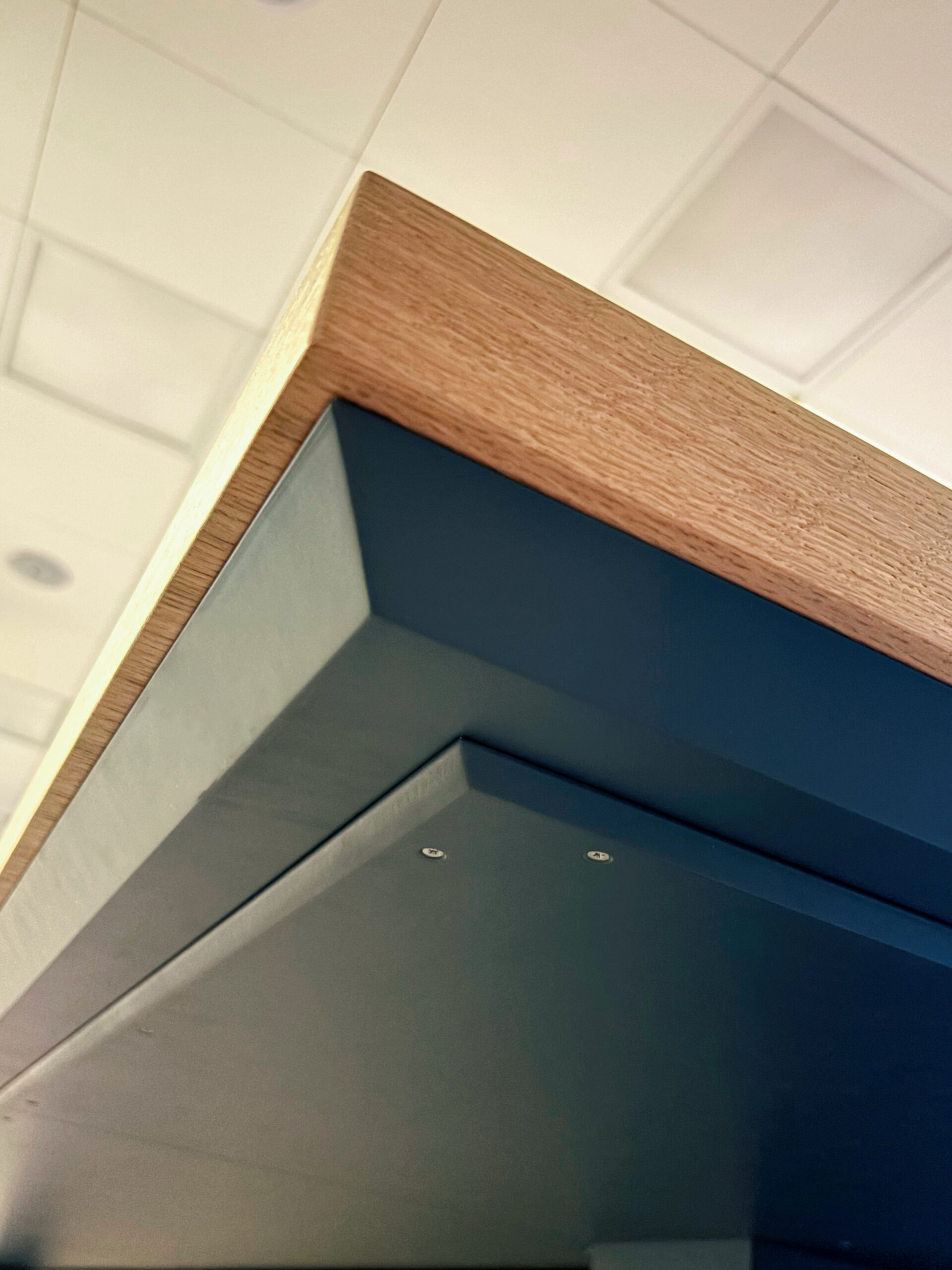
4.80 × 2.40-meter custom-made meeting table designed to seat up to twenty people. The anthracite lacquered wood base dialogues with an iron support structure, while the painted natural oak top restores warmth and visual solidity. The real complexity of the design is hidden inside: the table integrates
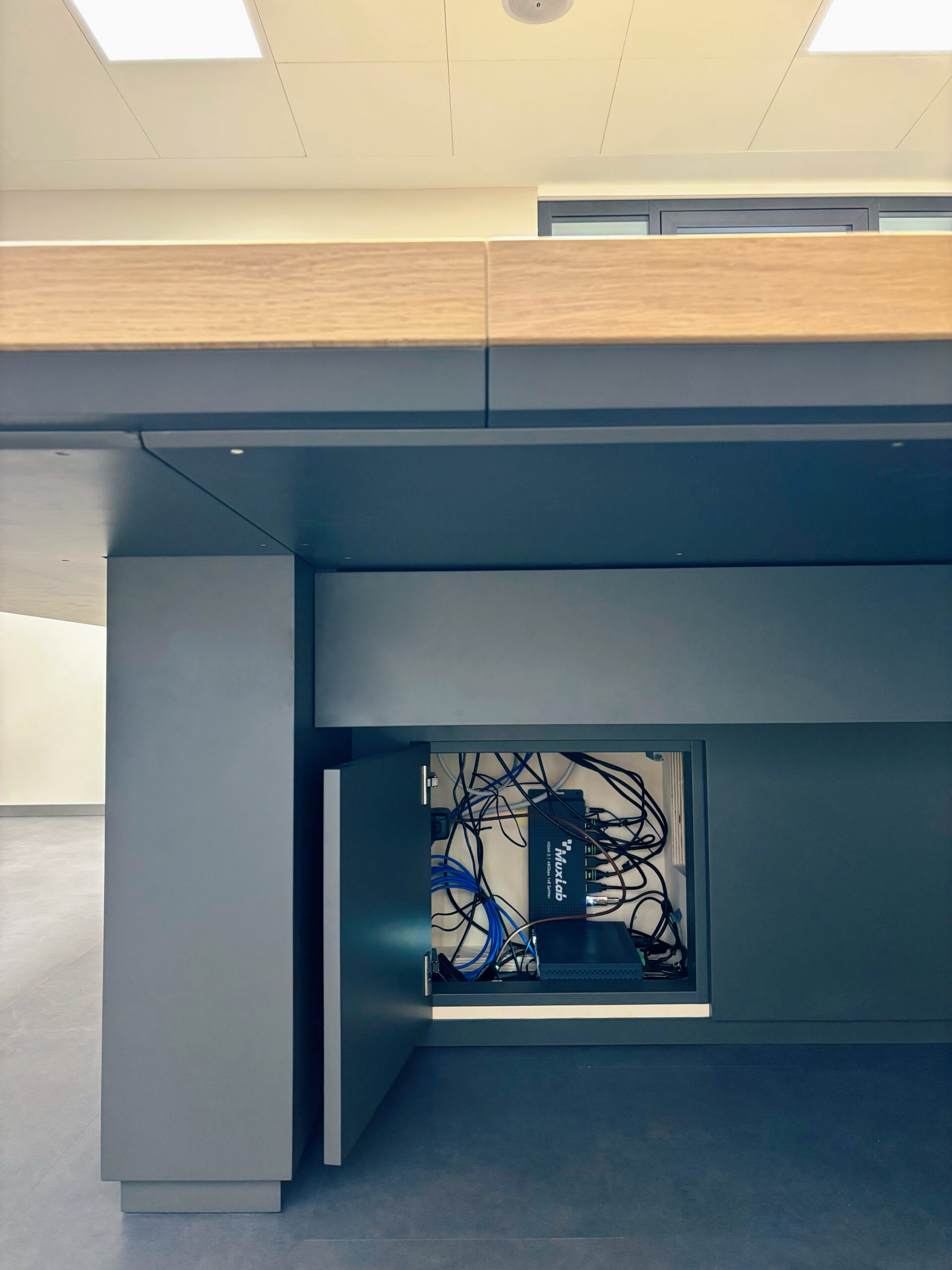
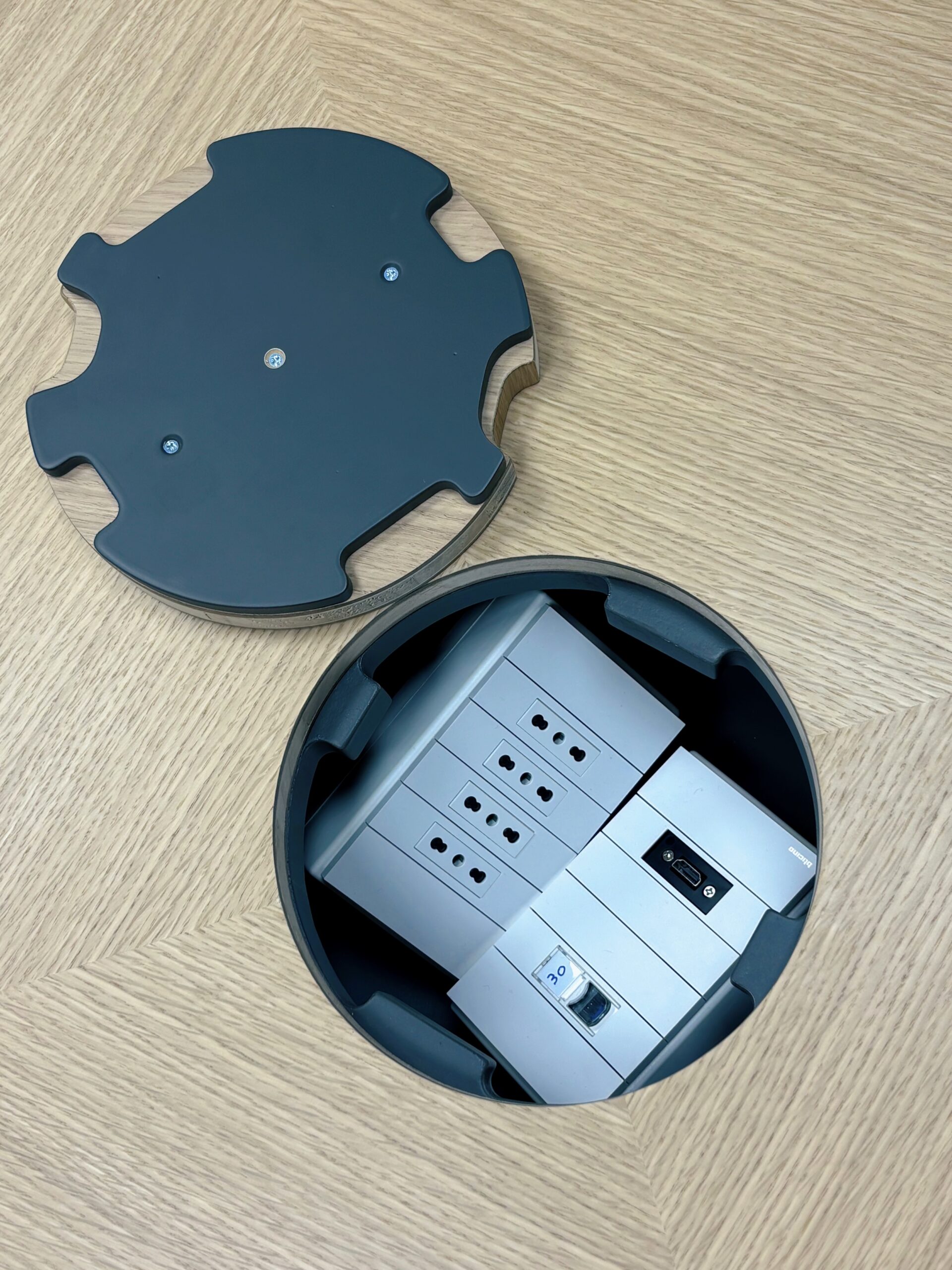
advanced electrical and audiovisual systems, which are completely concealed.
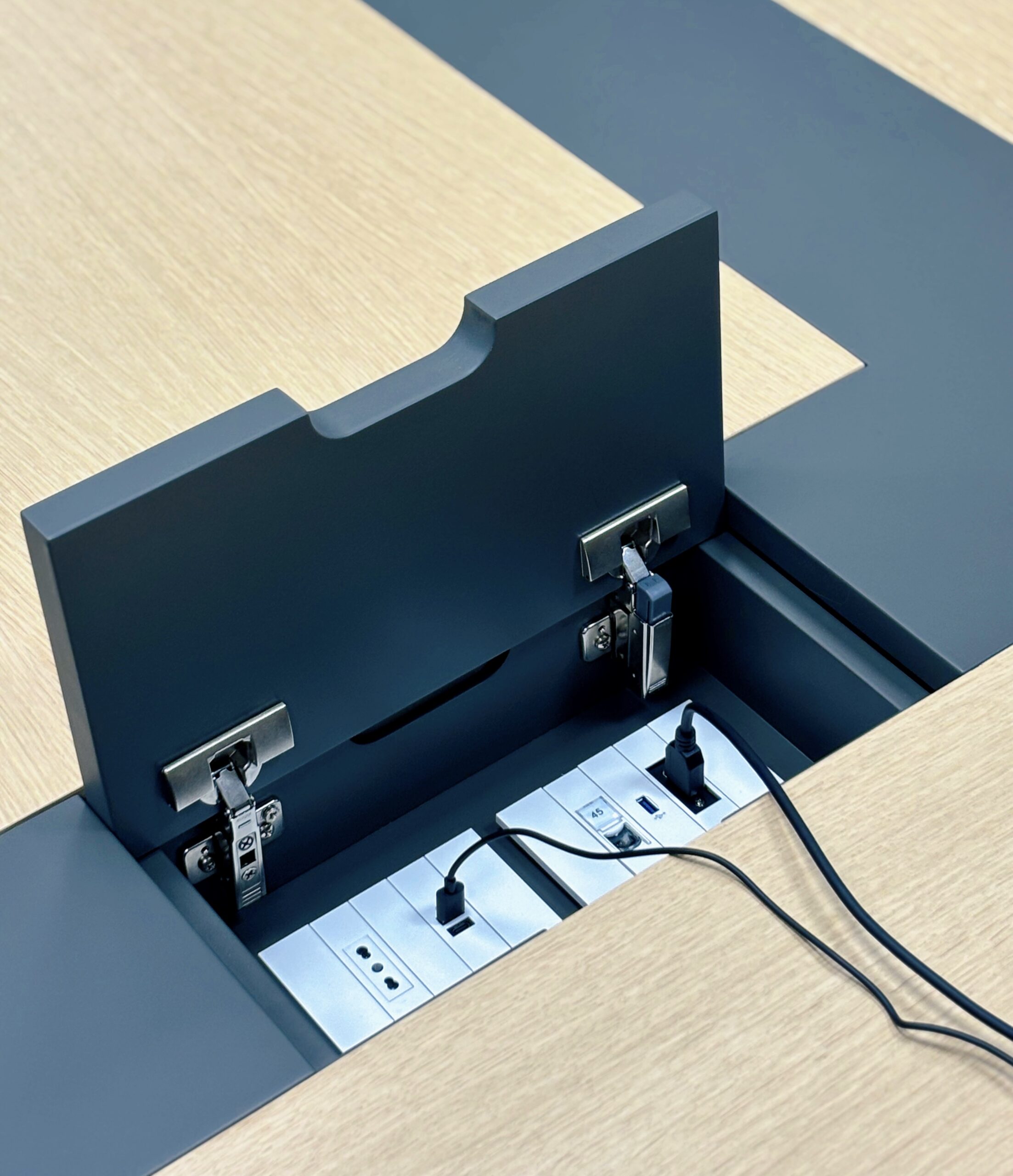
Six wooden top-accesses have been inserted into the top, a refined choice that surpasses the standard metal solution, already prepared for electrical outlets, USB and audio-video wiring.
Each element is accessible and upgradeable, but never invasive to the overall aesthetic.
Equipped paneling and invisible installations
The table dialogues with a
custom-made 2.70-meter-high paneling, designed to accommodate a 100-inch monitor and conceal all technical components: dedicated PCs, cabling, connections, and management systems.
The lower panels are
fully serviceable, allowing future maintenance and upgrades without invasive intervention. The connection between the table and the wall is provided by an electrical system on the floor prepared by the company. Saglietti Group intervened by precisely reopening the portions necessary for the passage of cables, ensuring continuity between infrastructure and furniture.
The result is a technological system designed for today but engineered to adapt to tomorrow's needs.
Two rooms, one design consistency
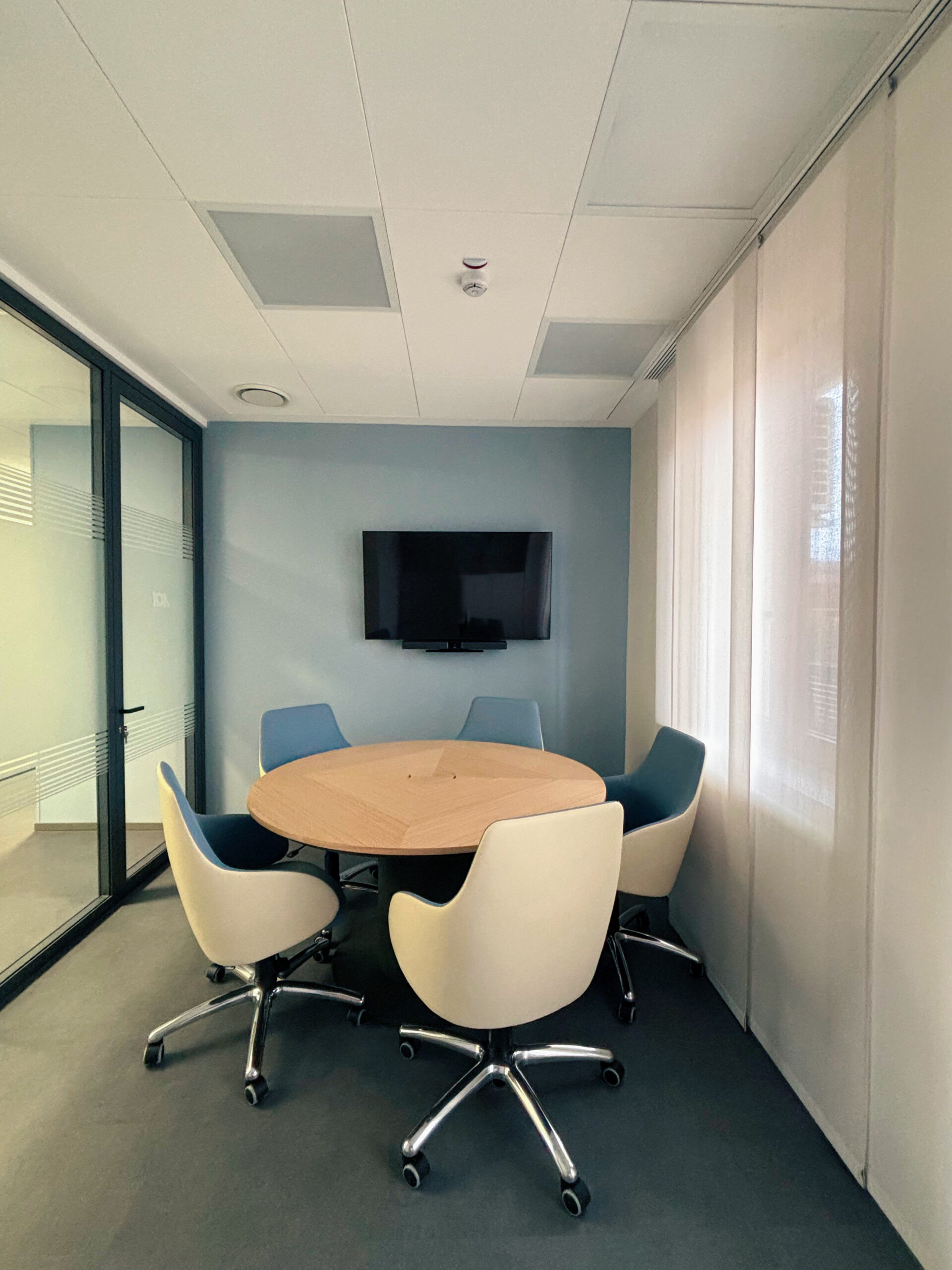
The second, more intimate room houses a
140-cm round table made with the same construction logic as the main room: anthracite lacquer, natural oak and iron frame. Completing the room is a
custom-made storage cabinet, essential and functional. The visual coherence between the two spaces is reinforced by the choice of
wallpaper, with a pattern inspired by nature, capable of creating depth, visual comfort and a discreet link with the Langhe territory.
Integrated design and technical coordination
The success of the project was possible thanks to close collaboration among all the figures involved. Interior designer
Elisa Mondino oversaw the construction management, ensuring consistency among the workers and adherence to timelines in a context as delicate as a fully operational historic building.
The engineering of the load-bearing furnishings was taken care of by designer
Davide Di Polito, whose work enabled flawless integration of the systems. The clarity of the steps and the precision of the arrangements were also appreciated during installation by the electricians, confirming a project designed to really work.
A project designed to last
Today,
ACA 's meeting rooms are representative, balanced and technologically advanced spaces. The quality of materials, hidden engineering and the possibility of continuous inspection and updating make these rooms
ready to evolve over time, without losing aesthetic coherence.
They are spaces that tell the identity of a historic institution, but more importantly, they are designed to accompany its future.