In the world of
exhibit design, the task is not simply to build stands, but to translate the essence of a brand into a physical space that is instantly recognizable. Saglietti Group, in collaboration with
Archiland, has turned this vision into reality for
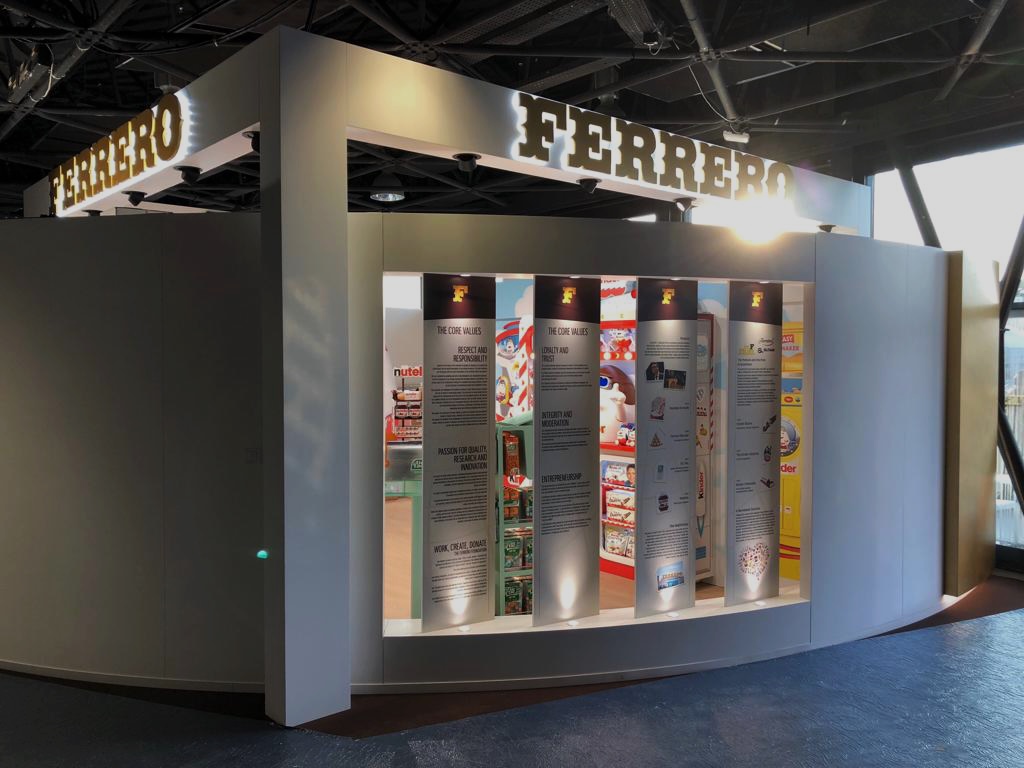
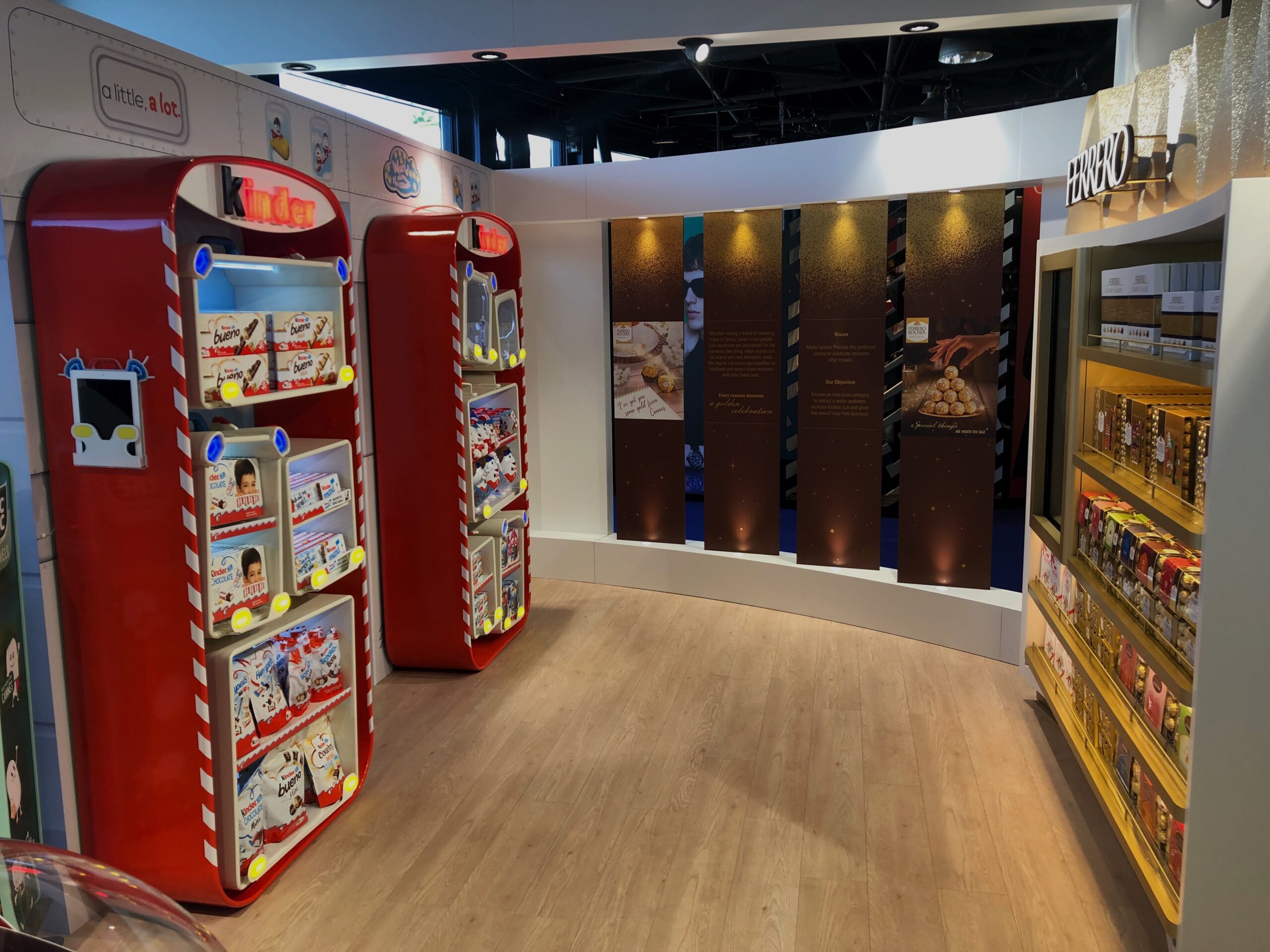
Ferrero, creating modular and iconic exhibits capable of telling the
corporate identity and generating
meaningful relationships with international audiences.
From Piedmont to the World: the Ferrero Identity
Ferrero was founded in Alba in 1946 as a small family confectionery shop and today boasts more than
35 iconic brands-from Nutella® to Kinder®, Ferrero Rocher® to Tic Tac®-distributed in more than 170 countries. The brand retains values such as tradition, product quality and responsibility, fundamental elements that Saglietti Group wanted to translate into every detail of the stands for international trade fairs.
Seven Years of Consistency and Innovation
From 2019 to 2025, Saglietti Group created seven editions of the
Ferrero stand at the
TFWA World Exhibition & Conference in Cannes, the leading event dedicated to travel retail. The goal was to
create spaces where the brand was recognizable even before reading the name: a consistent and recognizable design, capable of transforming the point of sale into a strategic touchpoint.
The project is based on a simple but powerful concept: continuity and adaptation. The
Ferrero stand maintains a basic identity structure, evolving through targeted changes at the functional, graphic and narrative levels. This strategy not only ensures immediate recognizability, but also optimizes materials and resources, reducing waste and increasing the
sustainability of the set-up.
Structure and Functionality: the Heart of the Stand
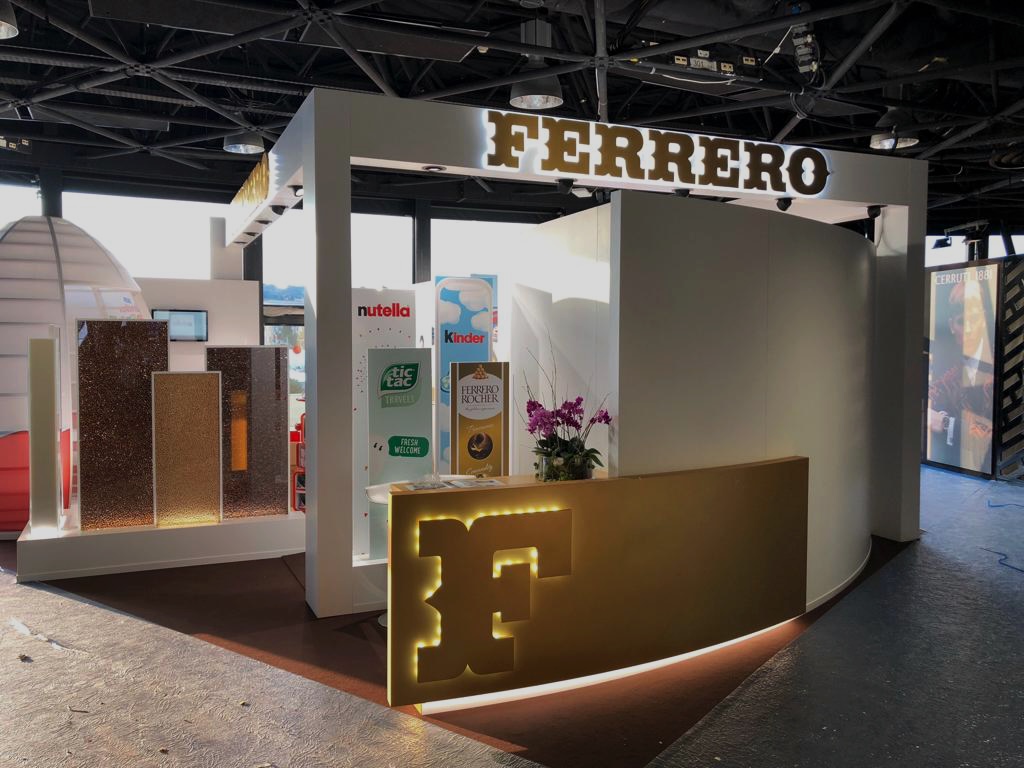
The stable shell of the stand is the core of
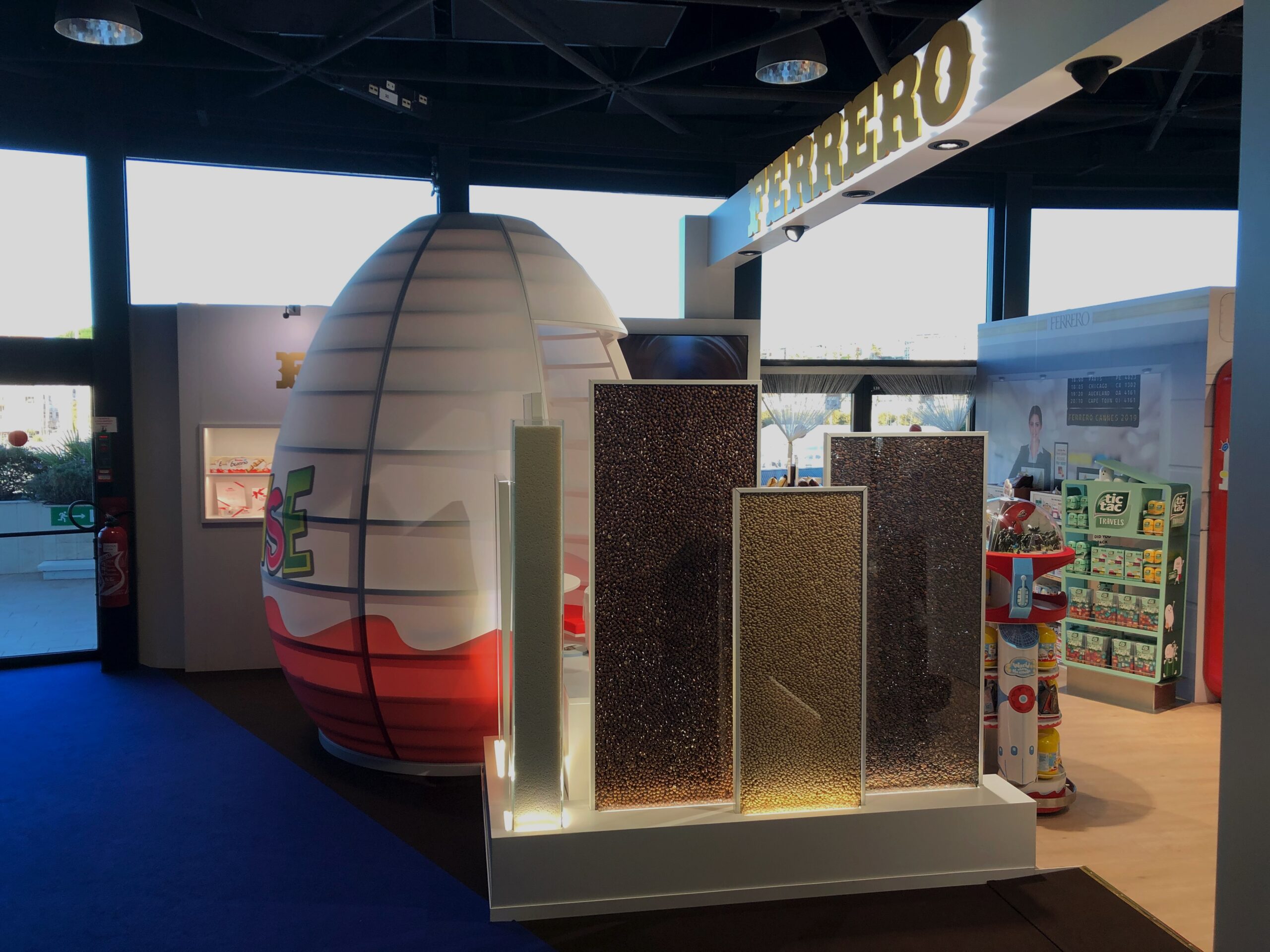
Ferrero's identity, designed to be recognizable even from a distance thanks to iconic elements such as the metalized gold color, calibrated through testing and sampling since 2018. Around this core, Saglietti Group has integrated
B2B meeting areas designed to facilitate direct relationships with visitors;
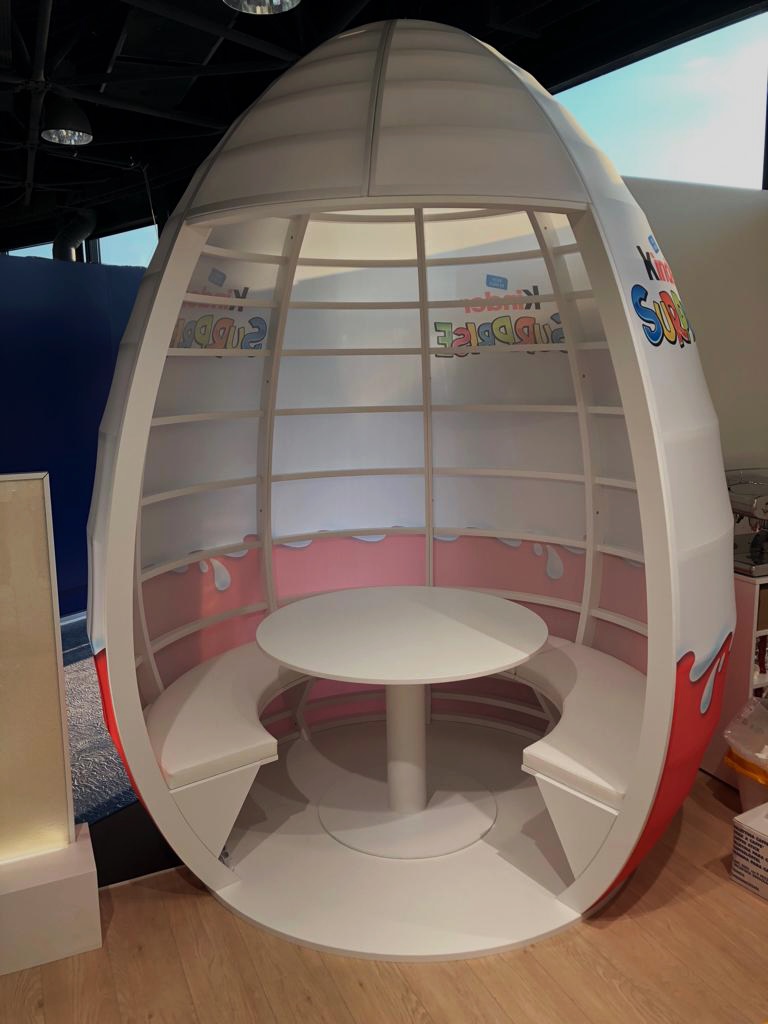
interactive and playful spaces, such as the Globetrotter Game, to tell the Ferrero world in an engaging way;
Narrative displays dedicated to sustainability, quality and responsible supply chains;
mazes and audio cornets for an immersive experience of products and manufacturing processes.Attention to detail and engineering allows abstract concepts to be transformed into concrete physical experiences, where architecture and storytelling come together coherently.
Collaboration and Recognition
The strength of the project lies in the synergy between
Archiland and Saglietti Group: architect Paolo Maldotti defined the original architectural concept, while Saglietti Group handled the engineering and implementation. The result is a
format that is replicable in conceptual structure, but adaptable to brand evolutions and new products, from classic Ferrero Rocher to more recent acquisitions in the biscuit segment.
Booth as a Place of Relationship
In addition to being a communication and branding tool, the
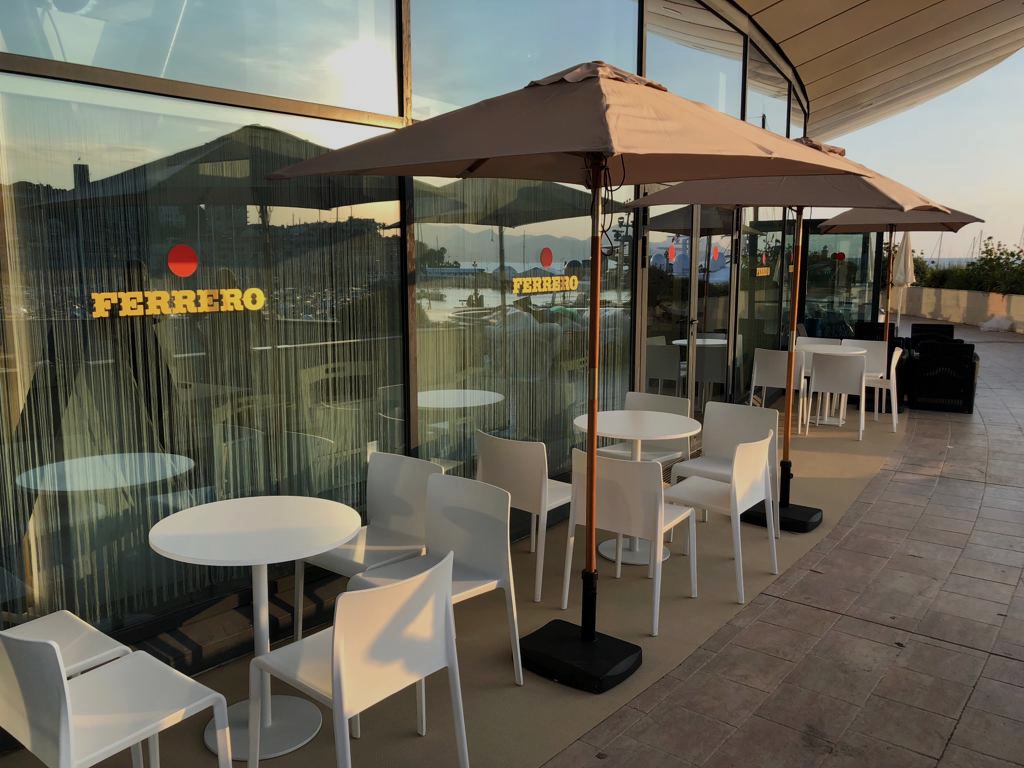
Ferrero booth is designed as a meeting space. Meeting areas and informal spaces such as the coffee corner allow buyers and visitors to have an
immersive experience, balancing work, dialogue and conviviality. Design becomes a tool for relationships, not just for display.
Design, Continuity and Innovation
The
Ferrero journey demonstrates how exhibit design can tell
the story of
a brand's identity without ever losing consistency. The combination of architectural design, engineering, and experiential storytelling enables the creation of spaces that
reflect the
brand's history and values,
generate
immediate recognition,
foster
meaningful interactions with the public.
For Saglietti Group, each project is a balance between tradition and innovation, between aesthetics and functionality where continuity is not a limitation but a strategic value.