An open and collaborative design process
The project was not developed according to a traditional construction drawing, but through an open and iterative process, carried out in close collaboration with architect Michele Bossio (A&T Progetti srl). The continuous dialogue between design and production made it possible to define spatial and technical solutions iteratively, starting from essential guidelines and progressively transforming them into concrete elements of the installation. This approach enabled very direct control over the details and a strong integration between concept and execution. Construction, which began in January 2025 following the site survey in October 2024, was completed in an extremely short timeframe, maintaining design consistency and precision of execution throughout all phases.Three rooms, one narrative
The exhibition is divided into three distinct yet closely interconnected spaces, designed as a single narrative system that guides visitors from the institutional dimension through the educational dimension to the historical memory.
Conference Hall
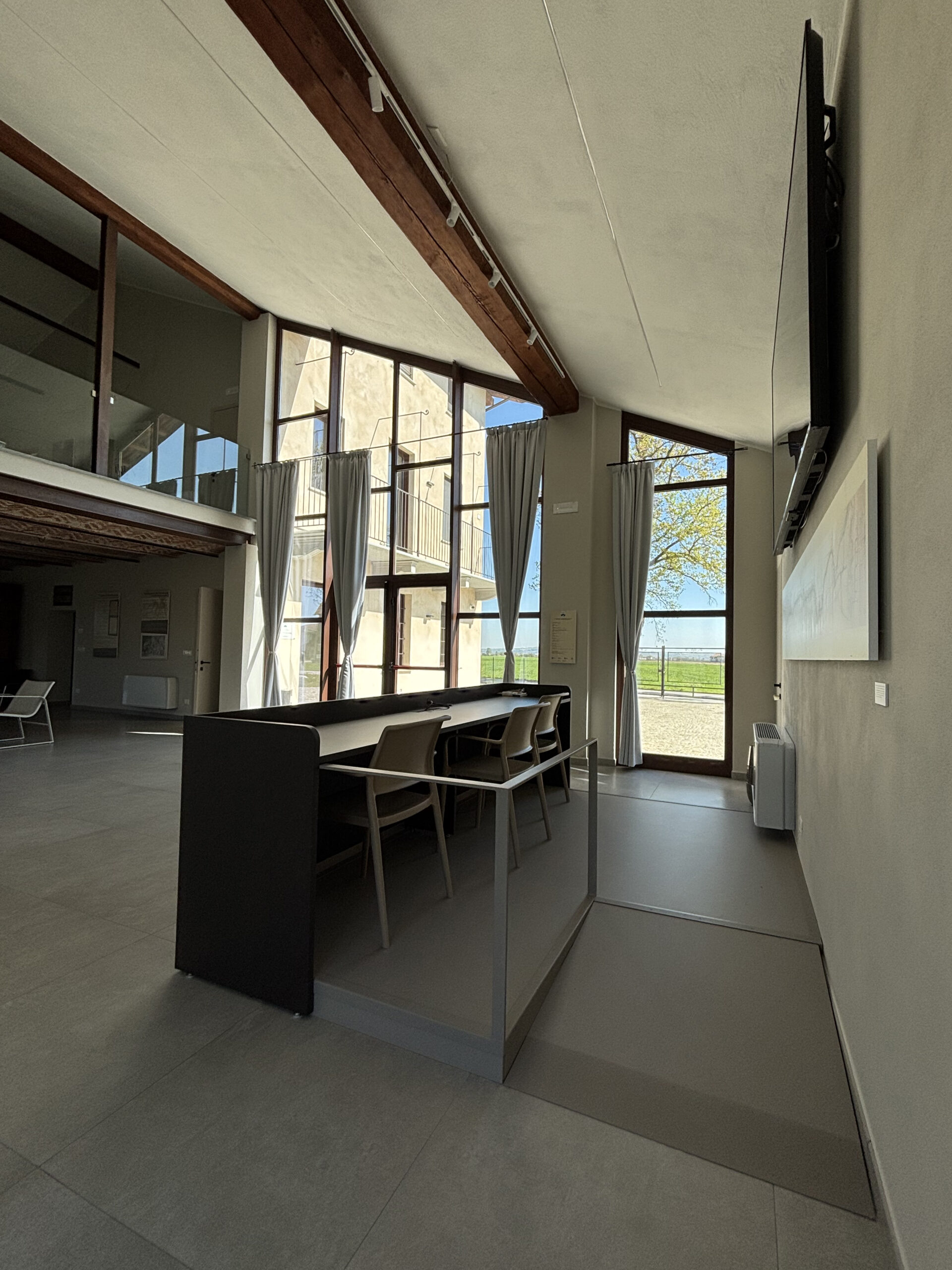
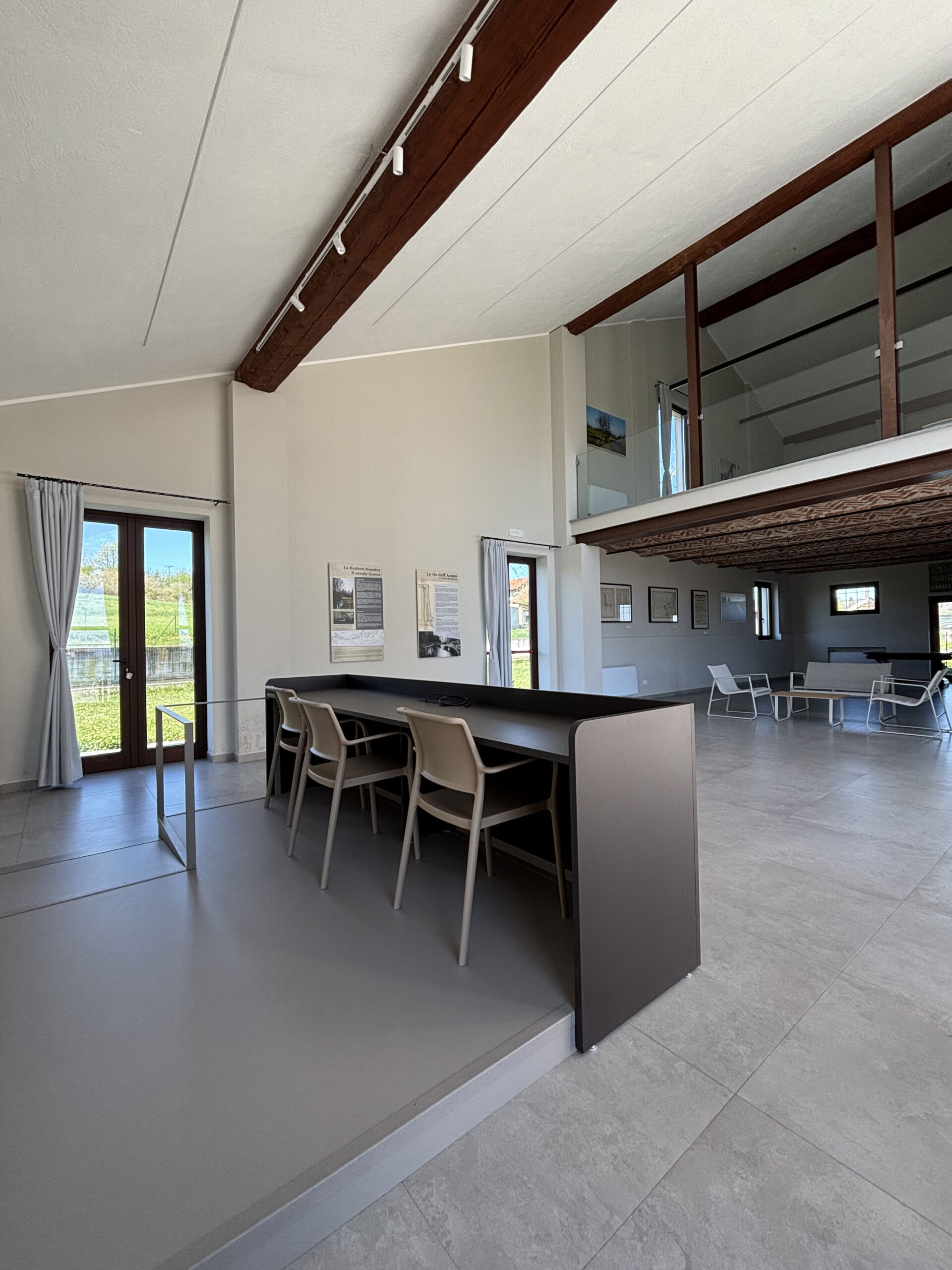
The conference hall serves as the primary operational and institutional space. Here, the design focuses on a minimalist and restrained aesthetic, centered around a three-meter-long custom-made lacquered MDF counter, conceived as a continuous volume without visual interruptions. This design choice addresses the need to convey an orderly and authoritative image, in which technology and functionality are fully integrated into the design. The 12-centimeter-high raised platform, constructed with a metal frame and laminate finish, serves an exclusively ergonomic function, improving visibility of the speakers and incorporating accessibility and safety features without compromising the clean lines of the space. The space is completed by modular informational panels that allow for the reconfiguration of content over time.
Study Room
The study room introduces a more open and flexible space dedicated to training and teaching. The bright space, visually connected to the conference room via an internal balcony, features tables, seating, and display systems consistent with the lower level. The central element is a custom-designed reversible whiteboard, made of ABET metal laminate on both sides. It is not merely a teaching aid, but a hybrid technical device that combines a writable surface with a magnetic board, capable of rotating thanks to a specially designed metal structure. Its engineering ensures stability, durability, and great flexibility of use, making it a true work tool as well as a piece of furniture.
Water Museum Hall
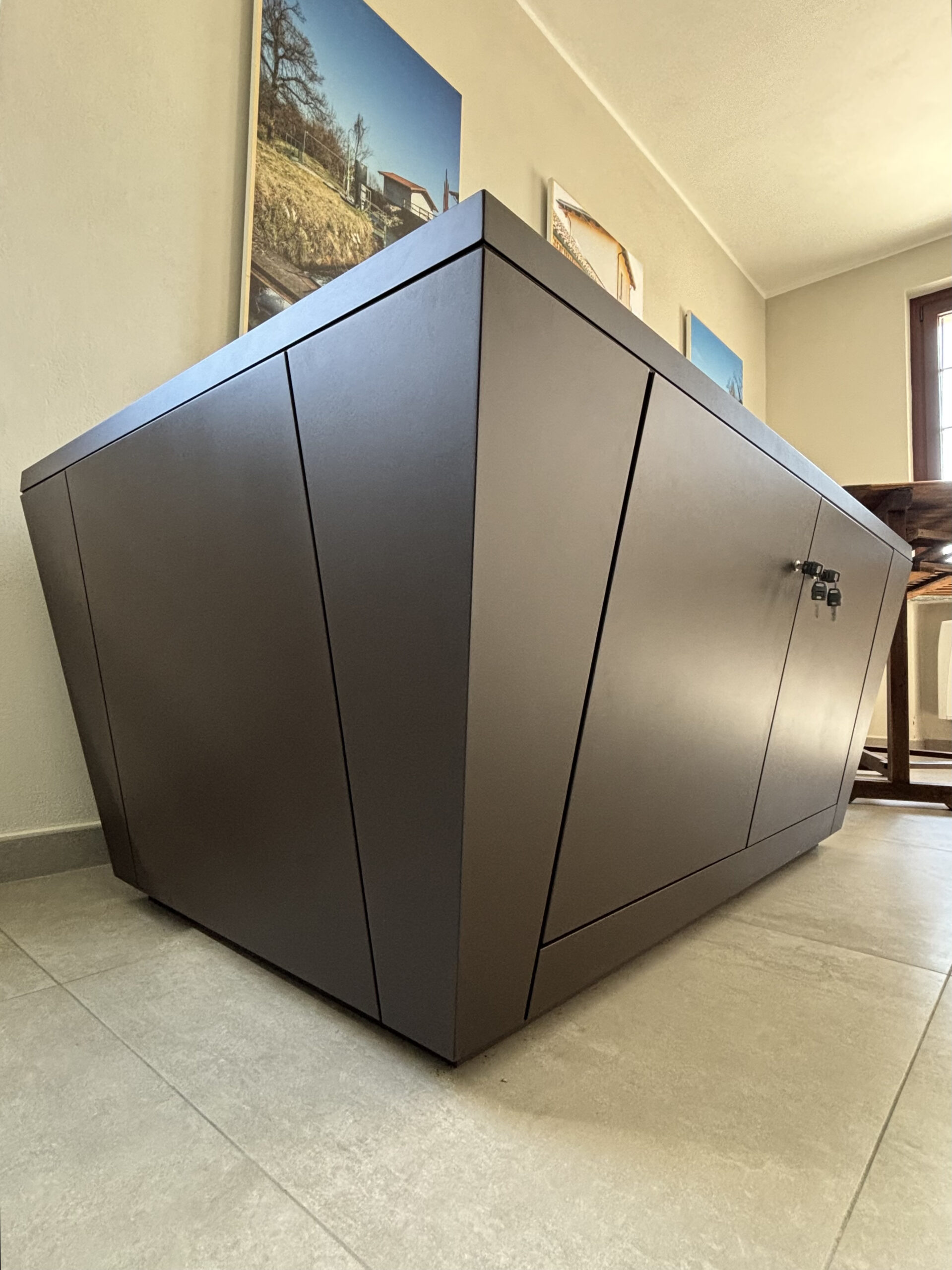
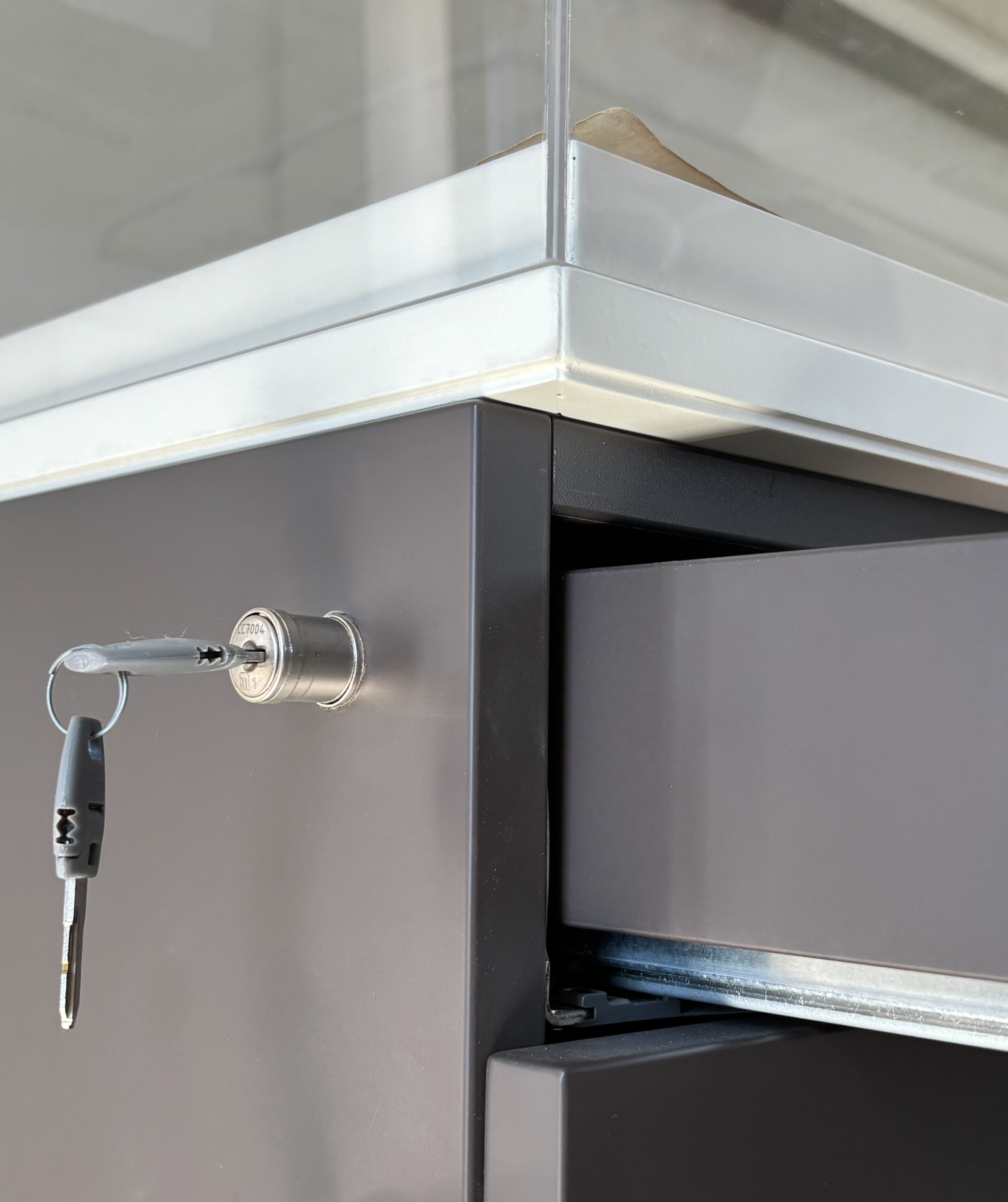
The Water Museum Hall serves as the narrative heart of the project. Here, the exhibition design takes on a more technical and conservation-oriented approach, featuring a large custom-built cabinet made of lacquered MDF designed for the management and protection of historical maps and cartographic artifacts. The main challenge was managing the wide-span drawers, which was solved by incorporating metal stiffening elements and a slight structural counter-curvature to control deformation over time. The system incorporates multiple locks and discreet technical solutions that ensure security and functionality without compromising the clean aesthetic. Next to it, an interactive table with an integrated touchscreen introduces a digital dimension to the experience of the content, making the museum space dynamic and accessible.