by Eleonora | Mar 12, 2026 | Museum layouts and exhibition spaces
Designing a museum exhibit means finding a balance between artifact preservation, scientific storytelling and visitor experience. It is from this principle that the intervention created by Saglietti Group for the Archaeological Museum of Bene Vagienna, where we oversaw the installation of two new rooms dedicated to the civil basilica of ancient Augusta Bagiennorum.
The museum, housed in the 18th-century Lucerna Palace in Rorà, tells the story of one of the main urban centers of southern Piedmont in the imperial age, founded under Augustus at the end of the first century BC. The expanded exhibition space is part of the cross-border project P.E.P.A. – Patrimoine Environnemental / Environmental Heritage., dedicated to the enhancement of archaeological and landscape heritage.
The staging project
The work involved two new exhibition halls on the second floor of the museum, opening in June 2024. The project was developed in collaboration with architect Michele Bossio (A&T Progetti srl), through a constant dialogue between architectural and exhibition design.
Room A introduces visitors to the excavation activities and construction of the basilica. The space is organized around a large double-sided vitrine that visually connects the two rooms, flanked by infographic walls and a partition wall with an integrated monitor that creates an area dedicated to stopping and exploring. One of the main design challenges was the presence of a pillar and a difference in height between the rooms, which was solved with custom-made furniture capable of integrating both elements and restoring continuity to the path.
Room B, on the other hand, delves into the architectural finishes of the basilica and the objects of daily life. Here the vitrine continues with a taller plexiglass dome to house larger artifacts, while in the center of the room a freestanding vitrine narrates the ceramic and metal materials found during the excavation. The tour concludes with afloor installation that collects fragments of the basilica floor under a large laminated safety glass.
A team project
The intervention resulted from the joint work between designers, museum and technical team. Special thanks go to architect Michele Bossio for the design comparison and to the Archaeological Museum of Bene Vagienna for the trust and vision with which it chose to invest in an exhibit capable of bringing archaeology and contemporary design into dialogue.
by Eleonora | Mar 2, 2026 | Offices and Industrial Spaces
The collaboration between Saglietti Group and Albertengo Panettoni was born in 2016, when two family businesses rooted in artisan tradition met: us with decades of experience in carpentry and them with nearly two centuries of history in the confectionery industry. The bond between our companies is based on shared values: respect for tradition, attention to detail and passion for quality. Thanks to this synergy, each project becomes not just a functional intervention, but a true custom design experience.
Meeting room and showroom: the first step in a long collaboration
The first assignment involved the transformation of a 46-square-meter room into a meeting room/showroom. The main challenge? To integrate 40 linear meters of brushed ash shelves with concealed structure and integrated LED lighting, ensuring aesthetics and functionality. Using modular solutions and concealed systems, each element was designed to be flexible, stable, and adaptable-a perfect example of how bespoke design and handcrafted engineering can coexist without compromise.
The corporate heart: indoor museum and dynamic woodwork
Between 2018 and 2019, we designed the Albertengo Corporate Museum, a 245-square-meter space designed to tell the story of the brand.
- Dynamic boiserie: open panels and niches, some furniture and lacquered in red and gold, with matte print inspired by packaging snowflakes.
- Corporate plastic: central table with glass case and integrated lighting, ready to grow in 2025 to support the company’s expansion.
- Modular solutions: self-supporting wood and glass portals, inspectable platforms and easily upgradable graphics, demonstrating flexibility and durability over time.
Integrated space management enabled the creation of functional and aesthetically consistent environments, combining tradition and innovation.
Executive offices: elegance and functionality
Massimo and Livia Albertengo’s offices combine refined aesthetics and tailored solutions:
- Administration office: 8 desks and 6 cabinets with double sliding doors, modular partitions to create a cafeteria area without masonry work.
- Maximum’s office: furniture on wheels, storage wall with integration of pillar and heating carrier, work surface optimization.
- Livia’s office: custom slanted desk for slanted wall, glass writing insert, stylistic continuity with burgundy color details to stand out from Massimo’s green office.
Each design choice was guided by functionality, aesthetic harmony, and future flexibility, demonstrating the effectiveness of modular design andcustom craftsmanship.
Innovation and flexibility: from point of sale to graphics Baj Milan
In 2023, the acquisition of the historical brand Baj Milan brought new challenges: the opaque graphics on the glazing and paneling were updated without replacing the modular panels, highlighting the durability and adaptability of our systems. Thanks to the modular design, each element can be easily disassembled, repainted and updated, ensuring aesthetic and functional continuity in future projects.
A partnership that grows over time
From 2016 to the present, the journey with Albertengo has shown how craftsmanship, modularity, and bespoke design can transform complex challenges into elegant and enduring solutions. Each project tells a story: from a meeting room to a museum, from executive offices to an interior retail outlet, with attention to detail and integrated functionality. This collaboration demonstrates how family businesses with shared values can create unique spaces, strengthening the link between design, history and innovation.
by Eleonora | Feb 13, 2026 | Custom interior Decoration
For us, design has always been not just about form, but about the relationship between thought, space and matter. When we talk about bedrooms, we refer not only to a place to sleep, but to experiential spaces that tell a story and dialogue with the environment that hosts them.
From MODE Hotel to StarsBOX: modularity and lightness
La Greenside Suite, developed together with architect Paolo Scoglio for the MODE – Eco Mood Hotel in Rimini, is a modular, reversible and conscious hospitality model. The integrated furniture system respects space constraints and transforms them into design value, offering a unique experience for the guest and a concrete example of sustainable design.
The StarsBOX, engineered for Officina82 (Lara Sappa and Fabio Revetria), instead represents pure microarchitecture: lightweight, replicable and immediately usable. Produced to order, in small batches or limited series, it combines industrial precision and attention to detail, embodying the approach of our Design Hub: designing unique objects and spaces, ready to be transformed into real experiences.
A bedroom–inside a goblet of wine
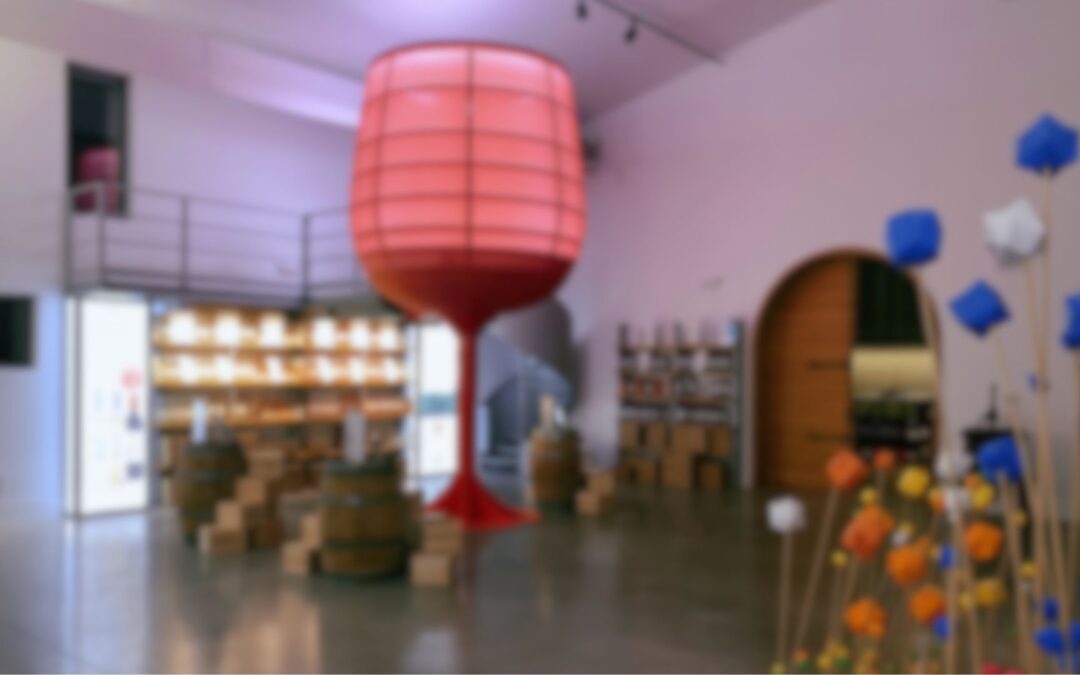
Then there is the most iconic and challenging project: a room suspended inside a wine glass. In 2018, together with architect Paolo Maldotti of ARCHILANDstudio, we engineered the famous Nu-Ovo, transforming it into a habitable micro-architecture in the barrique cellar of Domaine des Féraud, an organic winery in the heart of Provence.
The goal was to offer an unrepeatable experience: to sleep in the place where the wine rests, immersed in controlled humidity, among barrels, silence and history. The stem, 2.80 m high, is made of pinkish salmon-colored painted iron; the upper cup, made of white lacquered birch plywood, is covered in elastic lycra, which guarantees lightness and privacy. Every detail, from the round mattress to the rotating bed top and integrated LED lighting, is custom-designed to make the experience unique and functional.
Value beyond category
Projects such as StarsBOX o Casattava can be replicated, but the Greenside Suite and Chalice cannot exist without the space that houses them. These are not standard products: they are site-specific architectures, unrepeatable and deeply connected to their context.
For Saglietti Group, the value of a design lies not in its category, but in its ability to generate relationship between space, function and vision. This is where design becomes experience, and architecture is transformed into storytelling.

by Eleonora | Feb 12, 2026 | Events and exhibition setups
In the world ofexhibit design, the task is not simply to build stands, but to translate the essence of a brand into a physical space that is instantly recognizable. Saglietti Group, in collaboration with Archiland, has turned this vision into reality for Ferrero, creating modular and iconic exhibits capable of telling thecorporate identity and generating meaningful relationships with international audiences.
From Piedmont to the World: the Ferrero Identity
Ferrero was founded in Alba in 1946 as a small family confectionery shop and today boasts more than 35 iconic brands-from Nutella® to Kinder®, Ferrero Rocher® to Tic Tac®-distributed in more than 170 countries. The brand retains values such as tradition, product quality and responsibility, fundamental elements that Saglietti Group wanted to translate into every detail of the stands for international trade fairs.
Seven Years of Consistency and Innovation
From 2019 to 2025, Saglietti Group created seven editions of the Ferrero stand at the TFWA World Exhibition & Conference in Cannes, the leading event dedicated to travel retail. The goal was tocreate spaces where the brand was recognizable even before reading the name: a consistent and recognizable design, capable of transforming the point of sale into a strategic touchpoint.
The project is based on a simple but powerful concept: continuity and adaptation. The Ferrero stand maintains a basic identity structure, evolving through targeted changes at the functional, graphic and narrative levels. This strategy not only ensures immediate recognizability, but also optimizes materials and resources, reducing waste and increasing the sustainability of the set-up.
Structure and Functionality: the Heart of the Stand
The stable shell of the stand is the core of Ferrero‘s identity, designed to be recognizable even from a distance thanks to iconic elements such as the metalized gold color, calibrated through testing and sampling since 2018. Around this core, Saglietti Group has integrated
B2B meeting areas designed to facilitate direct relationships with visitors;
interactive and playful spaces, such as the Globetrotter Game, to tell the Ferrero world in an engaging way;
Narrative displays dedicated to sustainability, quality and responsible supply chains;
mazes and audio cornets for an immersive experience of products and manufacturing processes.Attention to detail and engineering allows abstract concepts to be transformed into concrete physical experiences, where architecture and storytelling come together coherently.
Collaboration and Recognition
The strength of the project lies in the synergy between Archiland and Saglietti Group: architect Paolo Maldotti defined the original architectural concept, while Saglietti Group handled the engineering and implementation. The result is a format that is replicable in conceptual structure, but adaptable to brand evolutions and new products, from classic Ferrero Rocher to more recent acquisitions in the biscuit segment.
Booth as a Place of Relationship
In addition to being a communication and branding tool, the Ferrero booth is designed as a meeting space. Meeting areas and informal spaces such as the coffee corner allow buyers and visitors to have animmersive experience, balancing work, dialogue and conviviality. Design becomes a tool for relationships, not just for display.
Design, Continuity and Innovation
The Ferrero journey demonstrates how exhibit design can tell the story of a brand’s identity without ever losing consistency. The combination of architectural design, engineering, and experiential storytelling enables the creation of spaces that
reflect the brand’s history and values,
generate immediate recognition,
foster meaningful interactions with the public.
For Saglietti Group, each project is a balance between tradition and innovation, between aesthetics and functionality where continuity is not a limitation but a strategic value.
by Eleonora | Feb 6, 2026 | Design Hub Projects
In thenautical furniture industry, each project is never a single isolated element, but a complex system of custom-made furniture, environments and solutions. Often, these projects are divided into production batches that must be replicated with industrial precision, maintaining design consistency and consistent quality. It is precisely in this context that our Design Hub, the operational heart of Saglietti Group dedicated to transforming customer ideas into efficient and controlled industrial production. We collaborate with general contractors specializing in nautical furniture, supporting them in the realization of specific portions of the project: not the entire yacht, but defined parts of the furniture, perfectly integrated into the overall design.
From design to production batch
The production process begins when the general contractor provides us with the 3D model of the elements to be fabricated along with the cutting plan, already optimized and divided sheet by sheet. Within these plans, each layer contains precise operating instructions, from through holes used for structural fasteners or passage of fasteners, to dedicated millings, which are essential to ensure the correct configuration of machining and machine movements. This layered organization allows us to work on only a specific portion of the project, producing only the required furniture parts and maintaining maximum fidelity to the general contractor’s original design.
Lot 1: the first production of a project
When a batch has never been produced before, so-called Batch 1, our skilled operator Luca translates the design into detailed machine programs, defining cutting, milling and drilling. Each machining operation in the software is color-coded, making the process clear, controllable and replicable in subsequent batches. Before moving on to actual production, Luca initiates a full machining simulation, which checks for interferences and collisions, minimizing errors and downtime.
From digital to CNC machine
Once the programming phase is completed, the batch enters the execution phase on the numerical control (CNC) machine. In the first batches, Luca performs an additional tooling check, verifying that the cutters are consistent with the planned machining operations. This step is critical to ensure accuracy, consistent quality and full industrial repeatability.
Labeling and pre-assembly: process optimization
Within the plant, we manage both the cutting and assembly departments, reducing errors and speeding up assembly. Thanks to an in-house developed labeling system, each part is identified and associated with the reference cabinet, ready for pre-assembly. This procedure allows us to deliver reliable components that are consistent with the design, even when we are working only on a portion of the furniture, never on the entire project.
The right material: Okumé for nautical furniture
Our general contractor predominantly uses Okumé, a high-performance, water-repellent wood that is ideal for marine environments and subject to constant humidity. Within the plant we process different types of Okumé, selected according to the target environment, type of furniture and finishes required. The material can be used raw, coated or painted, always ensuring quality continuity and consistency with project specifications.
Saglietti Group: the general contractor’s industrial partner
Saglietti Group’s value for general contractors, architects and designers lies in its ability to take a specific part of the project and turn it into a structured, precise and replicable industrial process. We intervene as an operational extension of the project team, translating the design into production without losing control, quality and consistency over time.
We don’t just provide machining: we operate as an industrial partner within complex design ecosystems, where each batch must meet high technical standards and rigorous production continuity. It is this integration of design, engineering and production that defines our Design Hub concept.




Recent Comments